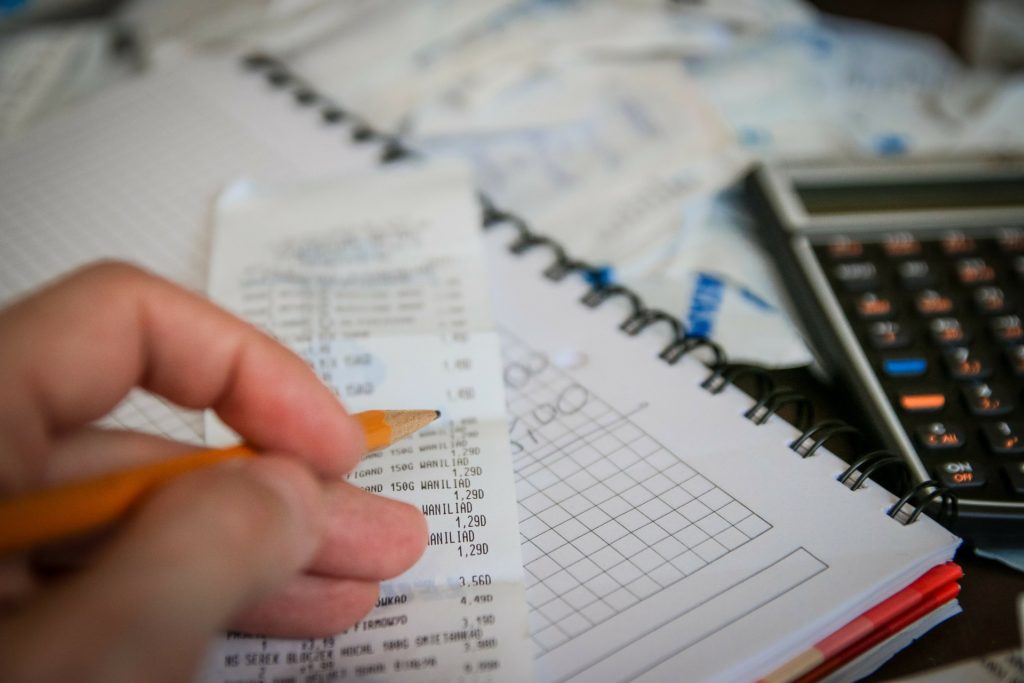
Knowing & tracking what you spend money on is the first step to controlling your expenses.
A great way to shock oneself is to track our spending closely for several months and see just how much you spend. I’m almost positive you’ll be shocked. We tend to spend what we have. We tend to spend far more that we realize.
Because we tend to underestimate what we spend, tracking yourself at some point is critically important. You need to know exactly what’s coming in and going out. Here’s my suggestion for the very basic essential steps of tracking your spending.
- Track for a minimum of 30 – 90 days.
- Best practice is to track forever. However, at a minimum, track at each juncture in your life where major changes in your financial life occur. Periodically reexamining your finances is likely to illuminate some areas you’ve lost track of.
- Determine your total earnings by subtracting your taxes and automatic deductions (retirement, medical insurance).
- Consider using automated financial tracking software.
- Manual – paper
- Manual – Excel
- You Need a Budget
- Determine your monthly expenses. Break down by major expense categories like:
- Housing
- Utilities
- Food
- Transportation
- Clothing
- Medical
- Insurance
- Debts
- Entertainment
- Savings
- Charitable giving
- Miscellaneous
- Record your average spending in each category over the past 3 – 12 months.
- Include items requiring annual or irregular payments, like:
- Insurance
- Taxes
- Subscriptions
Try tracking your spending for a month or three, and see what surprises you find hiding in your costs. Have you done it? What did you find? What surprised you? Do you still track? I’m curious!
The text moves with deliberate calm, creating a meditative flow where each sentence contributes to reflective rhythm. Ideas unfold gradually, encouraging the reader to linger, consider nuance, and experience layered insight and clarity.